The Engineering Blog

The current StackCalc engineering record: a shared RPN core, Apple apps, a firmware simulator, an unpowered mechanical calculator prototype, and the StackCalc Learning Lab. Each post distinguishes a working artifact from a planned or unmeasured result.

What the First Printed StackCalc Prototype Can Teach Us

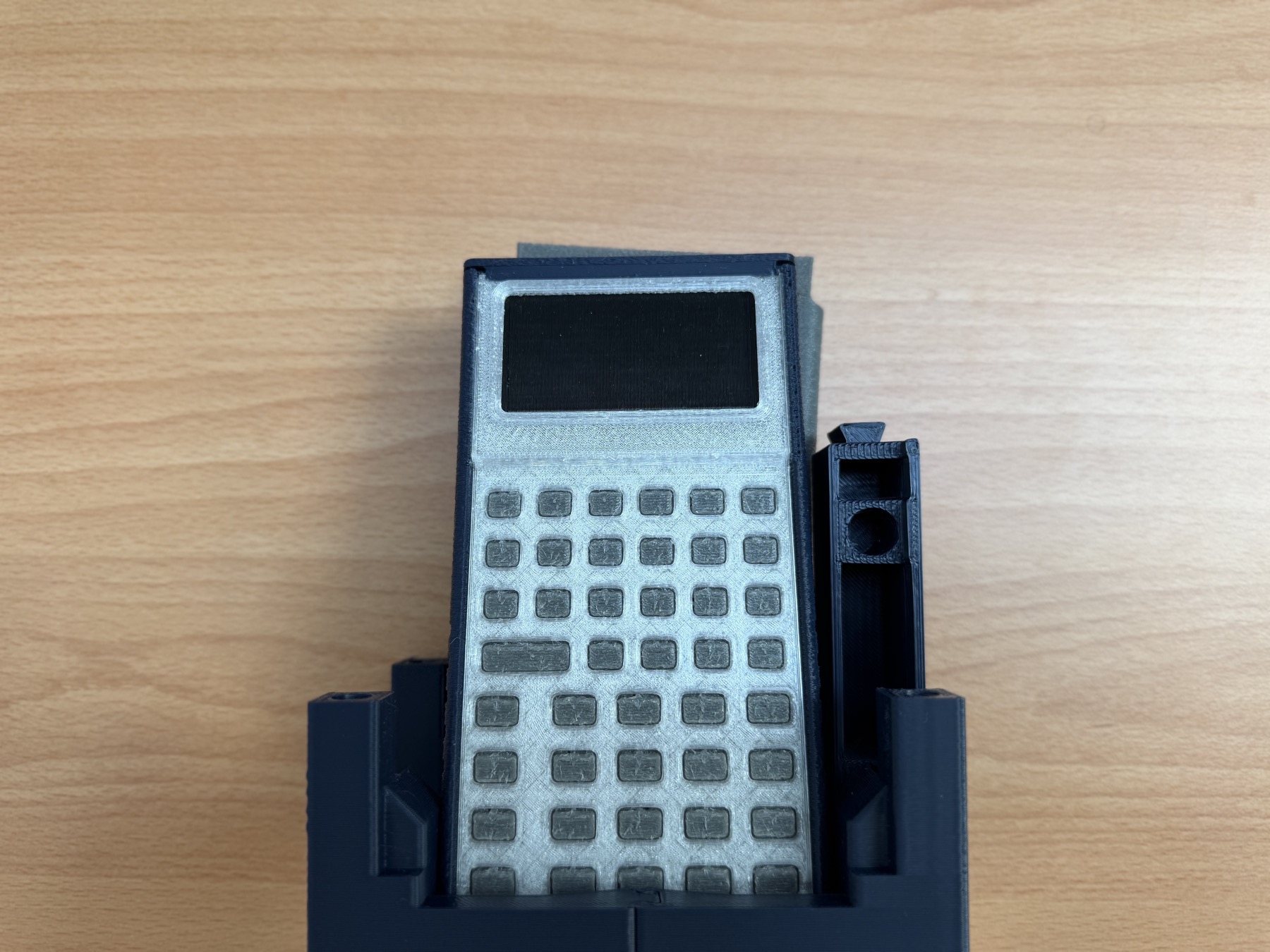
The first useful prototype is rarely the one that looks closest to a product. It is the one that makes the next decision cheaper. The current StackCalc hardware is a 3D-printed, tool-free mechanical prototype. Its KiCad PCB design is complete and fabrication is in progress, but there is no assembled, powered StackCalc board yet. The print lets us ask clearly: does the insertion path make sense, where does a part bind, and which keypad assumptions should be tested next?
From an Origami Box to a Puzzle Stand

Shipping support is usually dead weight: it protects a device for one trip and then disappears into a bin. We wanted the StackCalc packaging support to keep earning its space on a desk or shelf. That changed the design question from “how do we protect a calculator?” to “what can protect it, organize the kit, and become useful after unboxing?”

The first answer was an origami fold. The current answer is a printed puzzle stand: four dovetail-connected corner pieces form an upright shelf stand, while a separate strut becomes a low desktop typing support. The printed pieces and the package envelope are still being refined together, but the change already made the whole product feel more connected—from the first opened box to the way the calculator lives between uses.

A printed StackCalc prototype docked in the shelf-stand assembly.

Fuzzing the Firmware Path in an RP2350 Emulator

The StackCalc calculator board is not assembled yet, but the firmware path is already rich enough to break in interesting ways. A random input sequence can cross number entry, ENTER, stack lift, shifts, menus, modes, clear, correction, and display updates in combinations that a hand-written demo never reaches.

We use the RP2350 emulator to run the firmware image and fuzz those combinations through its keypad contract. That is firmware-emulation evidence, not evidence of a physical switch matrix or display.

One Calculator Core for Watch, Phone, and RP2350

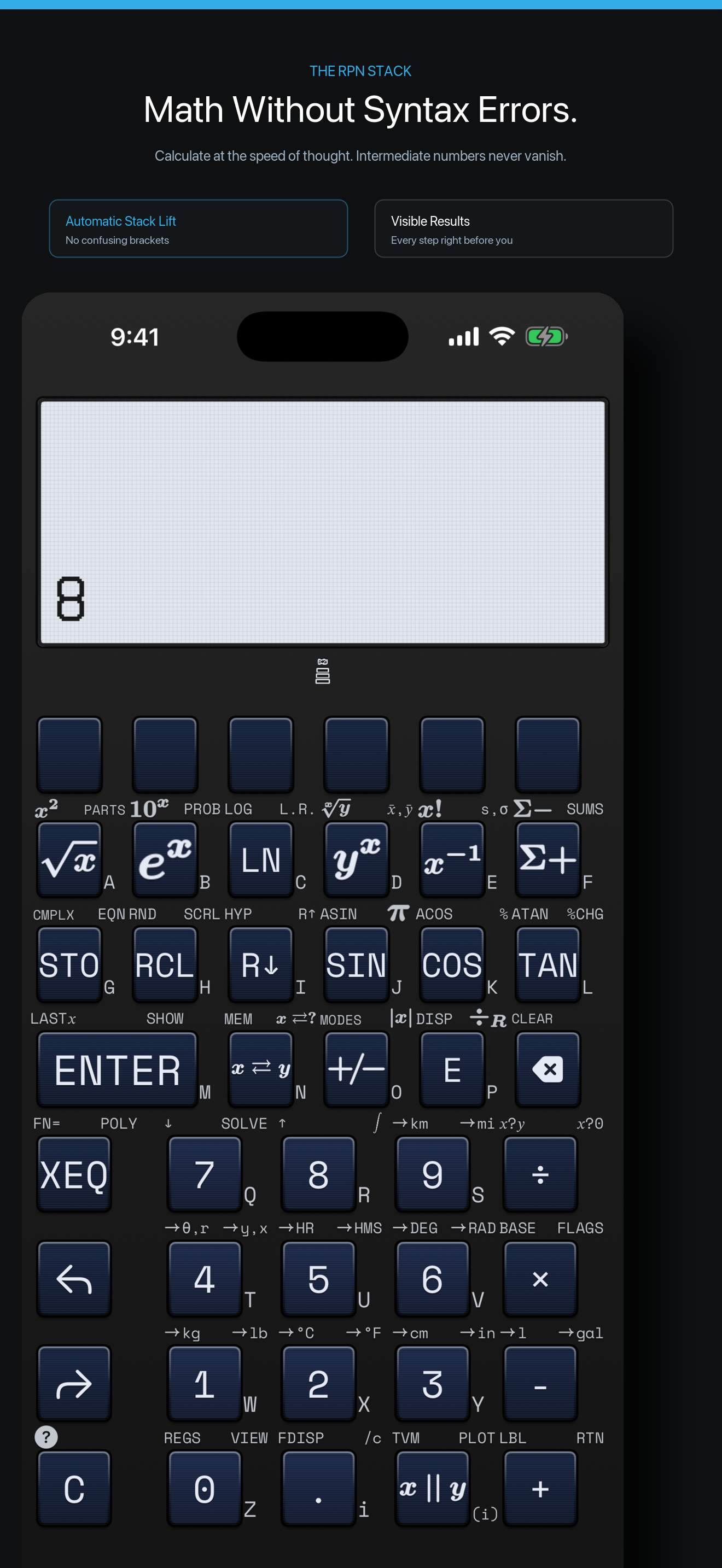
A calculator can look consistent across devices while disagreeing at exactly the moments that teach people how RPN works: ENTER, stack lift, an error state, a program step, or an unfinished number. We did not want the Watch, iPhone, and eventual handheld to agree only on the happy path. StackCalc has one calculator core so a named key sequence has one meaning before any surface decides how to draw it.

The iPhone app exposes the same RPN stack that the firmware-facing path renders into a compact display.

Teaching Fractions as an RPN Sequence

Fractions create two useful RPN questions: what quantity does a numerator and denominator represent, and what sequence turns those quantities into a result? The Learning Lab fraction studio keeps those questions side by side instead of asking a learner to jump straight to a symbolic entry.

A Tool-Free Calculator Built Around a Sliding Assembly

“Tool-free” is easy to write on a feature list and hard to make useful in a printed enclosure. The test is not whether an assembly has no screws; it is whether a person can insert, retain, inspect, and later release the parts without turning every opening into a breakage risk.

The current StackCalc assembly is an unpowered, four-part mechanical prototype: a tapered chassis, unified faceplate, TPU membrane, and snap-retained top cap. Its RP2350 KiCad board is in fabrication, but no assembled board has been installed, so this remains a mechanical design lesson rather than an electronics assembly claim.