Counting Tiles & Planar Array Studio
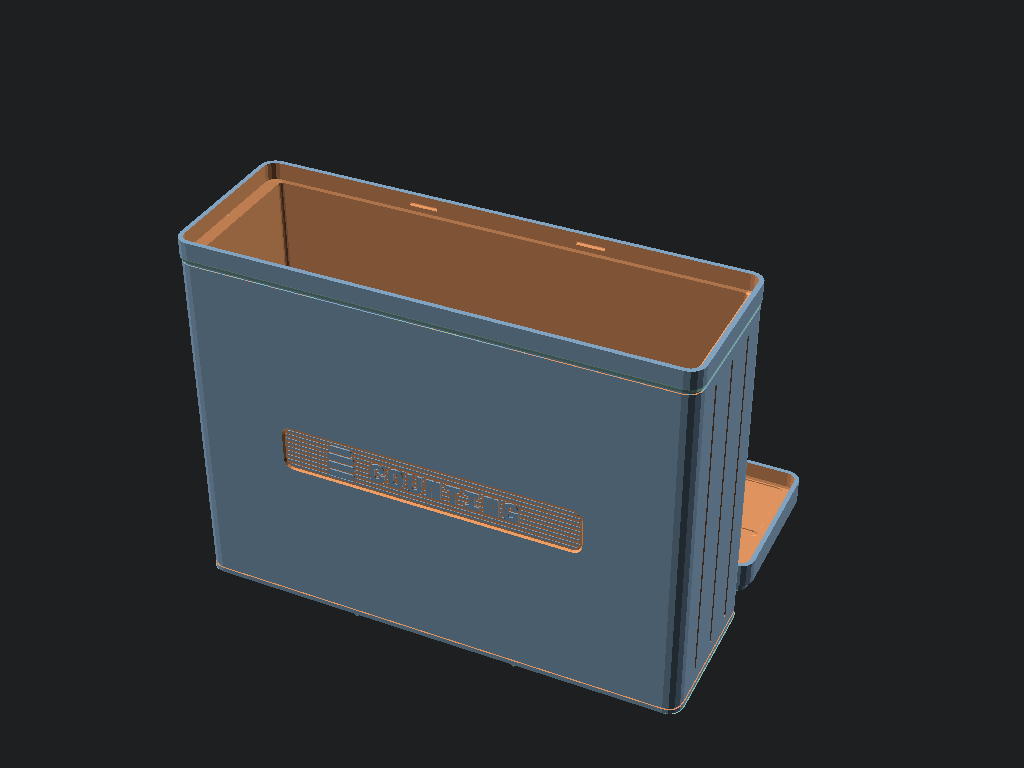
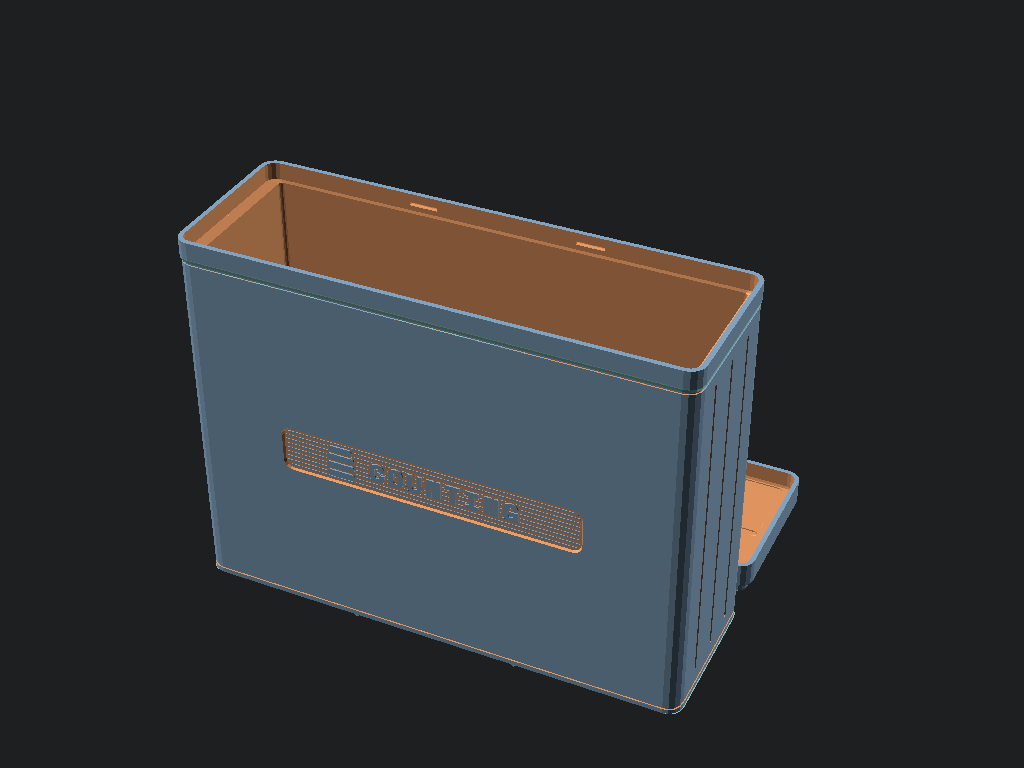
The ultimate tactile manipulative for one-to-one correspondence, rectangular arrays, partial product area modeling, and spatial reasoning. Contains 144 precision stacking tiles (4 colors × 36 tiles) housed in a 3×1×13U Gridfinity storage box with a 12-miniblock docking lid grid. Standardized to 7.0mm visible 1U height, perfectly harmonized with our Fraction Studio towers.
The Video Showcase: Animated Step-by-Step Lessons & Kinematics
Experience foundational counting principles, 1U fraction scaling, and distributive property area arrays directly from our classroom curriculum guide.
1U Fraction Scaling & Cardinality
Step-by-step proof aligning 12 counting tiles (7.0mm each) end-to-end to equal the 84.0mm Whole datum of Fraction Studio.
Distributive Property Array
Decomposing a 7×8 array (56 tiles) into friendly sub-arrays of 5×8 (40 tiles) and 2×8 (16 tiles) to make multiplication intuitive.
Zero-Tab Drop Durability
High-speed kinematic stress testing showing monolithic Gridfinity bases surviving repeated drops without breaking fragile snap tabs.
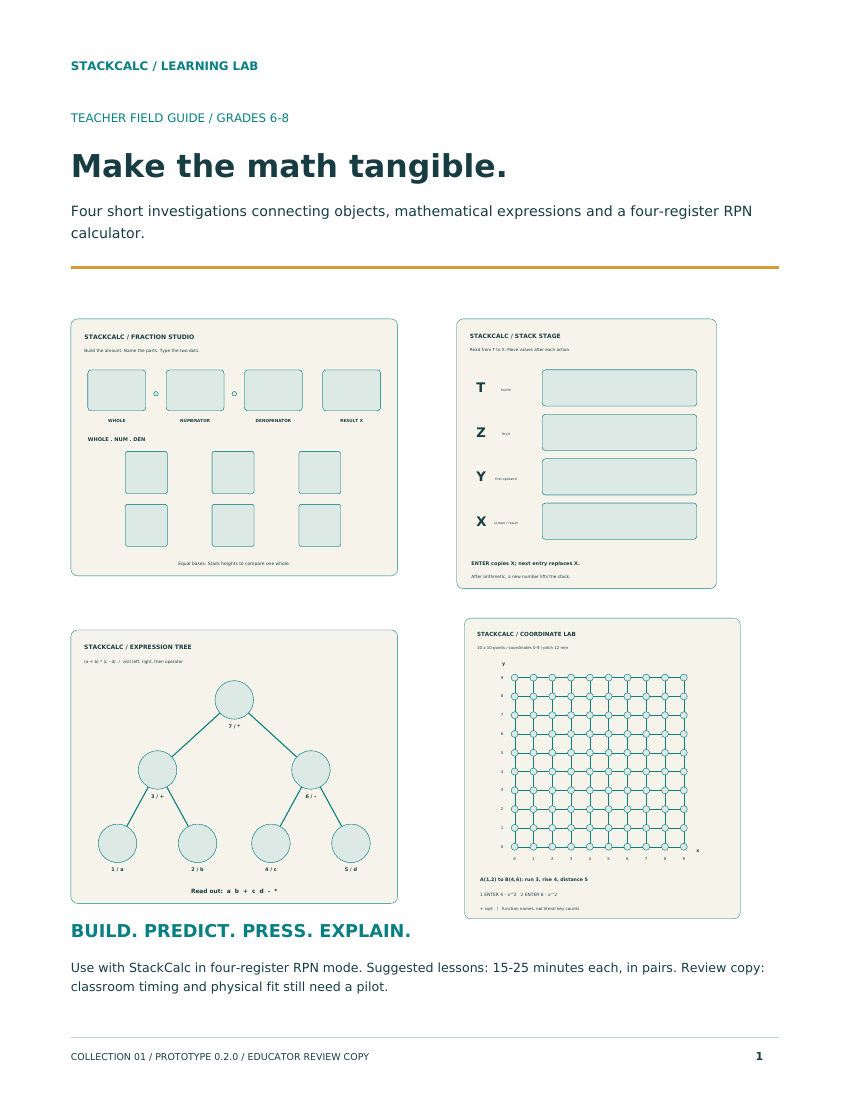
Counting Tiles Station Curriculum & Math Labs
Includes 12 reproducible station lab cards for area models, Four-Color Map Theorem planar investigations, and 1U fraction scaling.
// PHYSICAL HARDWARE SPECS
- Tile Footprint: 19.0 × 19.0 mm square miniblock footprint
- Visible Height: 7.0 mm (1U Gridfinity height; matches 1/12th fraction block)
- Total Tile Height: 8.85 mm (7.0 mm body + 1.85 mm bottom Gridfinity base plug)
- Enclosure Box: 3×1×13U Gridfinity Bin (125.5 × 42.0 × 91.0 mm body)
- Master Stack Height: 95.4 mm (91.0 mm body + 4.4 mm upper stacking lip)
- Front Plaque: Deep-relief debossed "COUNTING" instrument badge
- Rear Button: Exact hardware replica squircle button badge stamped "[NUM]"
- Total Weight: ~310 g (Box, lid, and 144 precision tiles)
// CURRICULUM & STANDARDS
- Kindergarten (K.CC.B.4): One-to-one cardinality, count sequences to 20
- Grade 1 (1.OA.C.6): Ten-frames bridge-through-10, part-part-whole decomposition
- Grade 2 (2.OA.C.4): Equal groups, rectangular arrays up to 5×5
- Grade 3 (3.OA.B.5): Distributive property: \(7 \times 8 = (5 \times 8) + (2 \times 8)\)
- Grade 4 (4.NBT.B.5): 4-quadrant area models for multi-digit multiplication
- Grade 5–6 (5.OA.A, 6.EE.A): Sieve of Eratosthenes, prime array factorization
- Discrete Math: Four-Color Map Theorem planar graph coloring
Why We Eliminated Traditional Snap Cubes
Traditional linking/snap cubes were invented over 50 years ago. While well-intentioned, their tiny plastic ball-and-socket tabs quickly become loose or snap off, and their interlocking friction makes disassembling arrays difficult for young children. StackCalc Counting Tiles redesign elementary counting from first engineering principles:
| Design Attribute | Traditional Plastic Snap Cubes | StackCalc Counting Tiles (TILE-01) |
|---|---|---|
| Connection Mechanism | Friction ball-and-socket tabs (breaks, hurts fingers) | Gridfinity gravity docking (45° chamfer, 0.4mm slip-fit) |
| Planar Array Stability | Lateral sockets bow and warp when locked into flat planes | 100% coplanar alignment; forms rock-solid 2D grid arrays |
| Height Harmony | Arbitrary 20mm cube; incompatible with fraction rods | 1U = 7.0mm (3 tiles = 21mm cube; 12 tiles = 84mm Fraction Tower) |
| Color Distribution | Random 10-color bag (too few of any one color for arrays) | 36 × 4 colors = 144 tiles (builds full 12×12 multiplication square) |
| Storage Ecosystem | Loose plastic zip bag or cardboard bucket | 3×1×13U Gridfinity box with 12-miniblock array docking lid |