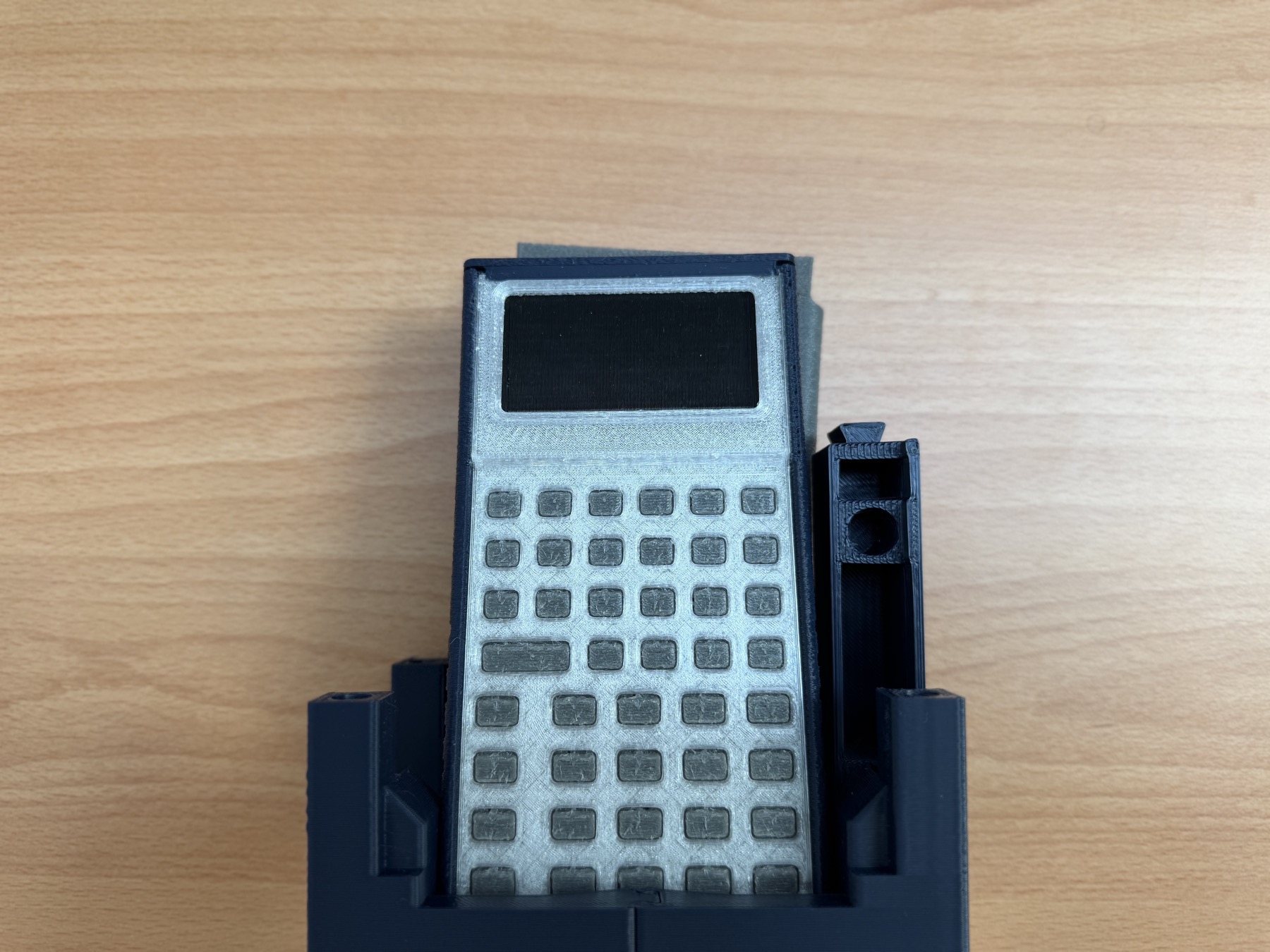
From an Origami Box to a Puzzle Stand
Shipping support is usually dead weight: it protects a device for one trip and then disappears into a bin. We wanted the StackCalc packaging support to keep earning its space on a desk or shelf. That changed the design question from “how do we protect a calculator?” to “what can protect it, organize the kit, and become useful after unboxing?”
The first answer was an origami fold. The current answer is a printed puzzle stand: four dovetail-connected corner pieces form an upright shelf stand, while a separate strut becomes a low desktop typing support. The printed pieces and the package envelope are still being refined together, but the change already made the whole product feel more connected—from the first opened box to the way the calculator lives between uses.